Fast.
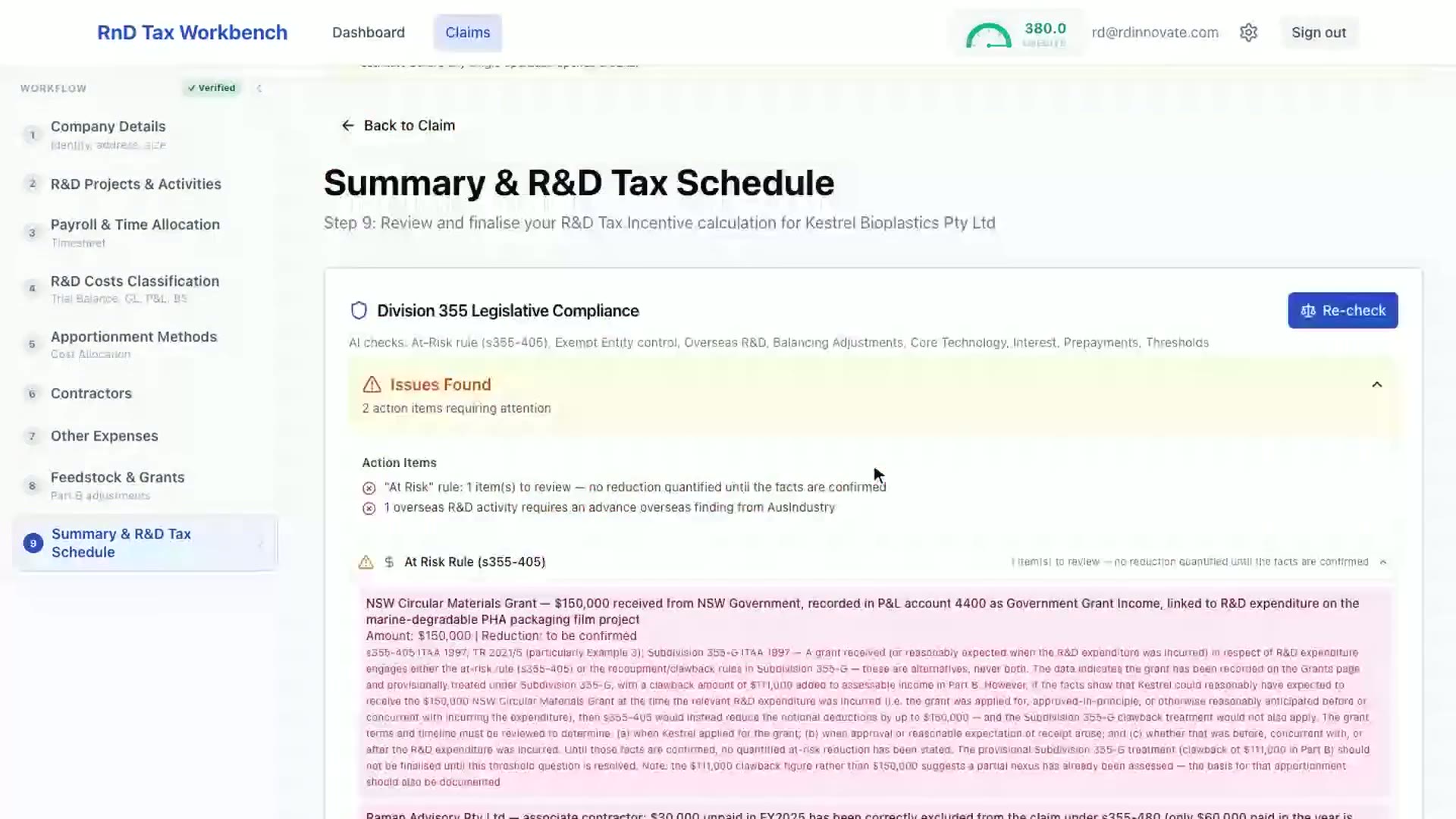
Ledgers, payroll and timesheets to a finished claim schedule, without weeks of back-and-forth.
Now for Australia, New Zealand and the United Kingdom
The R&D Tax Claims, reimagined.
For macOS, Windows and Linux. Pay as you go from A$29, NZ$29 or £20.
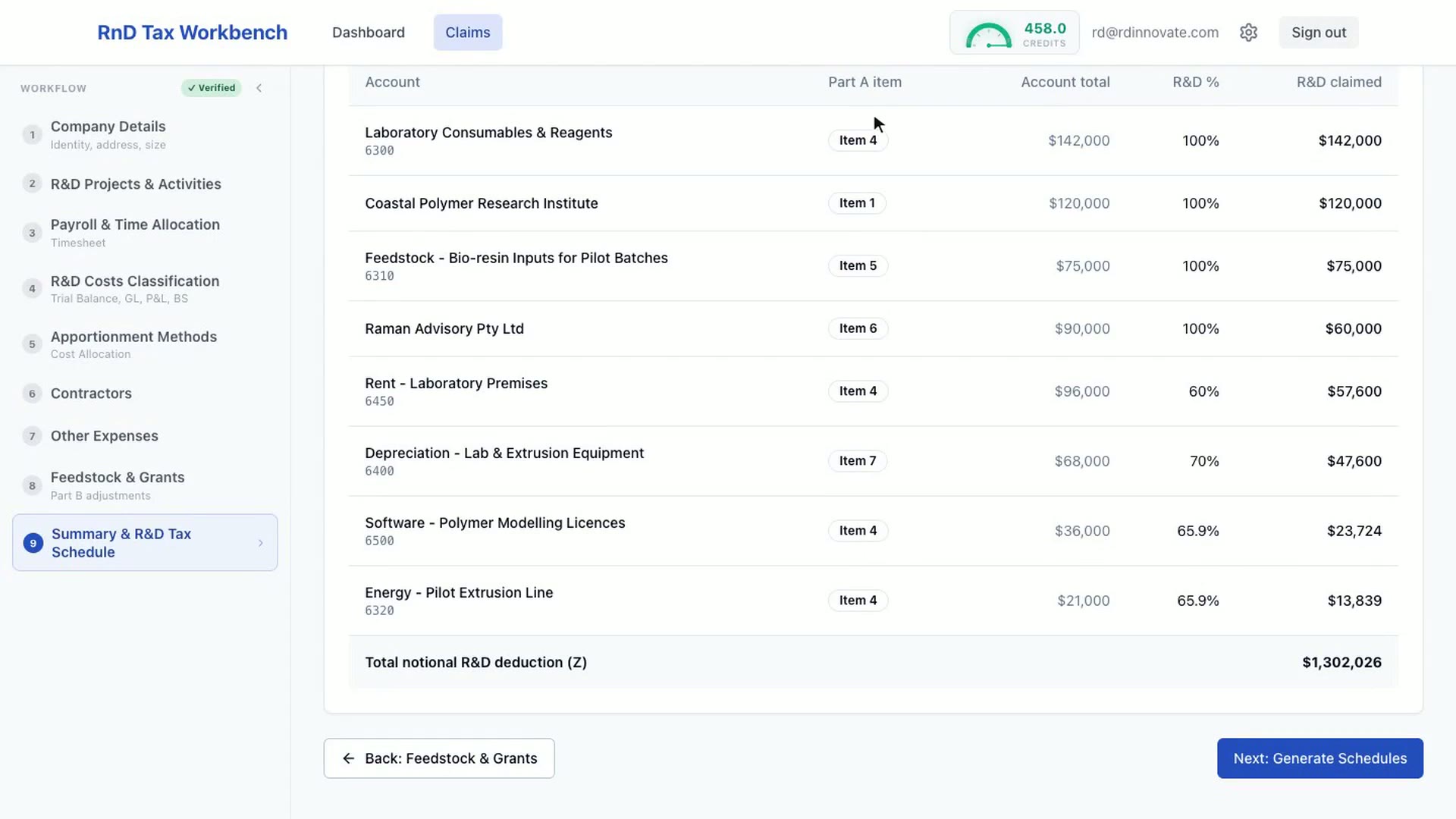
Ledgers, payroll and timesheets to a finished claim schedule, without weeks of back-and-forth.
A$29
Credits, not thousands of dollars taken as a percentage of your refund.
Division 355 in Australia, subpart LY in New Zealand and Part 13 of the Corporation Tax Act 2009 in the UK, in every calculation, from feedstock and grants to associates and overseas work.
Claim data is stored on your own computer, not on remote cloud servers. Only what an AI step needs is sent for processing.
One tool for every client claim, year after year.
Four steps, on your own machine.
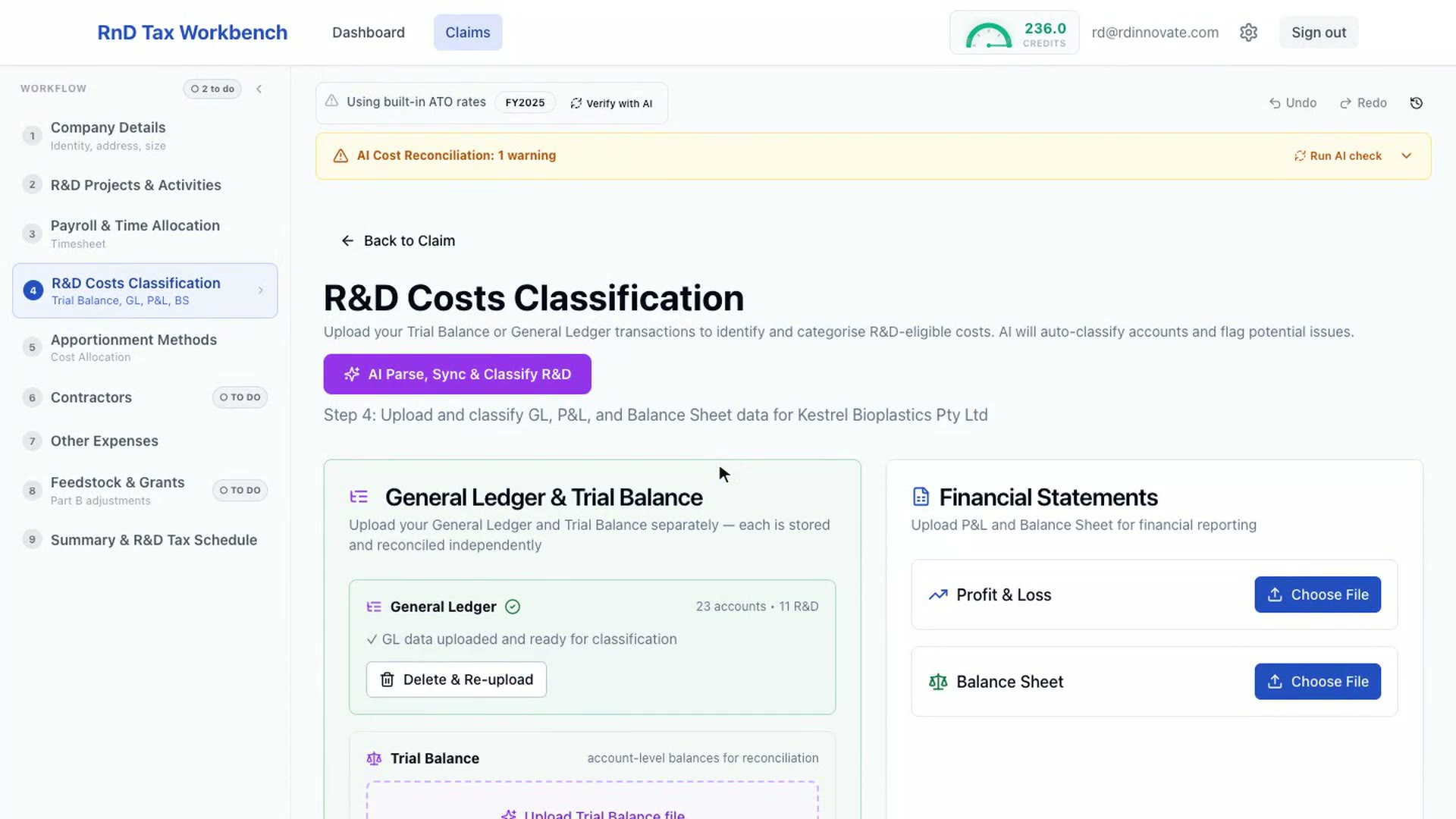
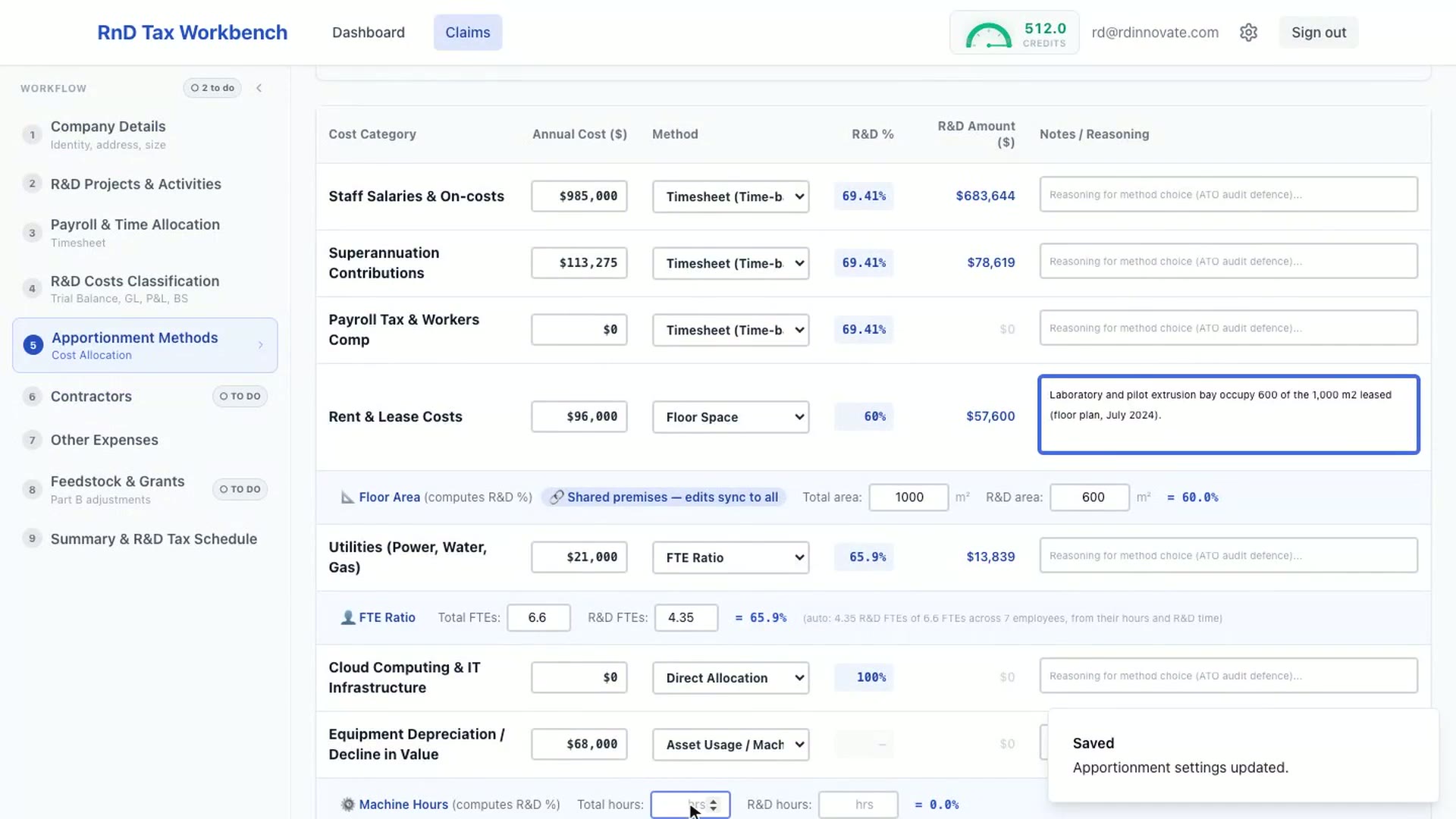
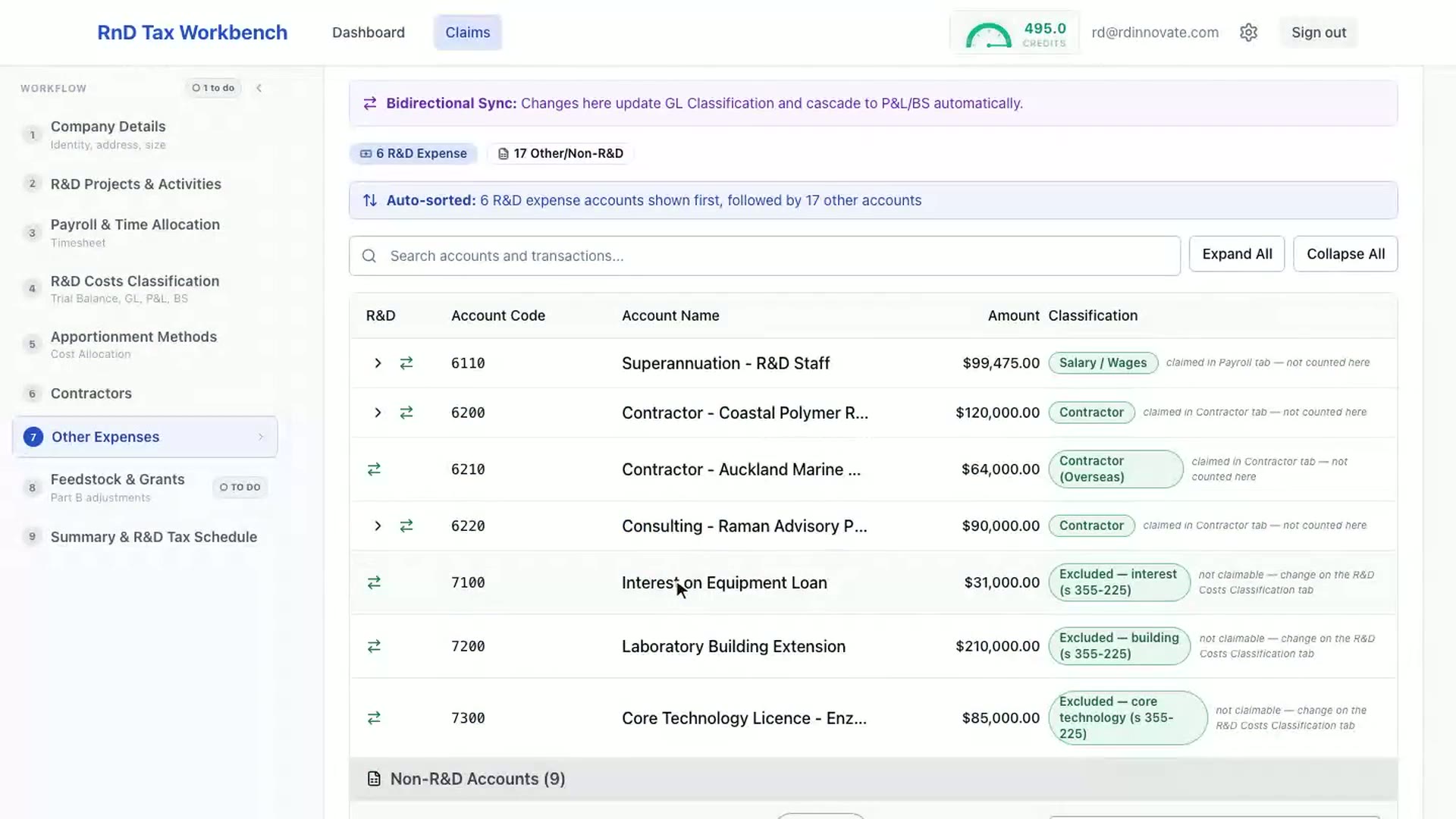
Buy credits when you need them. No subscription, and no percentage of your refund.
Prices in Australian dollars for the Australian edition. The New Zealand edition is priced in New Zealand dollars, from NZ$29. The UK edition is sold to businesses in pounds sterling, from £20, without VAT (the customer accounts for it under the reverse charge). Credits are used by the AI-assisted steps, such as classification and narratives.
A full claim for a company, from sign-up to the final schedule. About ten minutes.
The same walkthrough for a New Zealand R&D tax credit claim, from sign-up to the supplementary return workpaper. About twelve minutes.
The same walkthrough for a UK R&D claim under the merged R&D expenditure credit scheme, from sign-up to the additional information form and the CT600 boxes. About nine minutes.

Three editions, each for macOS (Apple silicon and Intel), Windows 10 and 11, and Linux.
A fully in vitro architecture maps, optimises, and scales the four-step enzymatic synthesis of 1,2,4-butanetriol from 10 microlitres to 1 litre at low reagent cost.
An independent reconstruction algorithm immune to calibration errors validates the black hole shadow of M87*, yielding a 42.2 microarcsecond ring diameter.
Pretreating transparent conductive oxides with homometallic halides strengthens interface anchoring, helping inverted perovskite solar cells withstand severe thermal cycling.